The Aunt Polly & the Osaki House
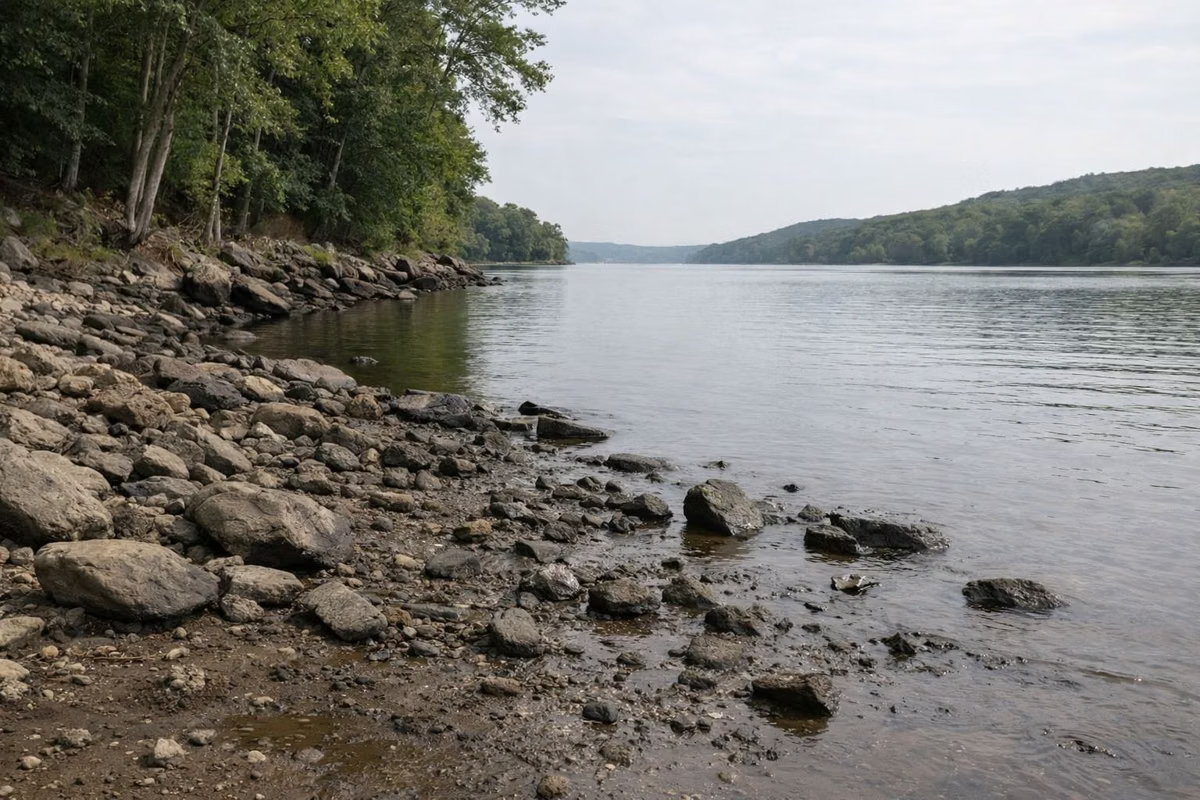
The Aunt Polly was William Gillette's 144-foot steam houseboat. It burned in December 1932 where it sat on the riverbank below his castle, and its hull still lies on the Connecticut River shore inside Gillette Castle State Park. Since 2003 the wreck has been a Connecticut Archaeological Preserve, one of only two underwater preserves in the state. DEEP's Blue Trail leads to it and to the house of Gillette's valet, Yukitaka Osaki; low tide gives the best view.
The Aunt Polly at a Glance
The Boat
CT Humanities describes the Aunt Polly as a 144-foot steamship built in Brooklyn in the late 1880s, Gillette's second houseboat, supposedly named after a woman who once cared for him when he was ill. In 1903 he had it lengthened by 44 feet to make a bigger salon, with a working fireplace and a piano, and he entertained guests on board, Albert Einstein among them.
It was from the Aunt Polly, on a trip up the Connecticut River in 1911, that Gillette first saw the Seven Sisters hills and chose the site for his house. He moored the boat at the river's edge during construction. In 1919, with the house finished, he set the boat on a concrete foundation at the shore and turned it into a garden house (history of the castle).
The Fire
In December 1932 the Aunt Polly caught fire and was a total loss. Rumour said Gillette had burned it for the insurance. He answered in the local newspaper that this could not be true, "owing to the fact that there was no insurance. I did not think of it in time."
The Preserve
In 2003, after study by Historical Perspectives Inc., the remains were designated a Connecticut Archaeological Preserve. DEEP and CT Humanities both note that it is one of only two underwater preserves in Connecticut. The designation protects the site, so look but leave everything where it lies. When the river is at its lowest, CT Humanities says more than 100 feet of the hull shows above the water.
How to Get There
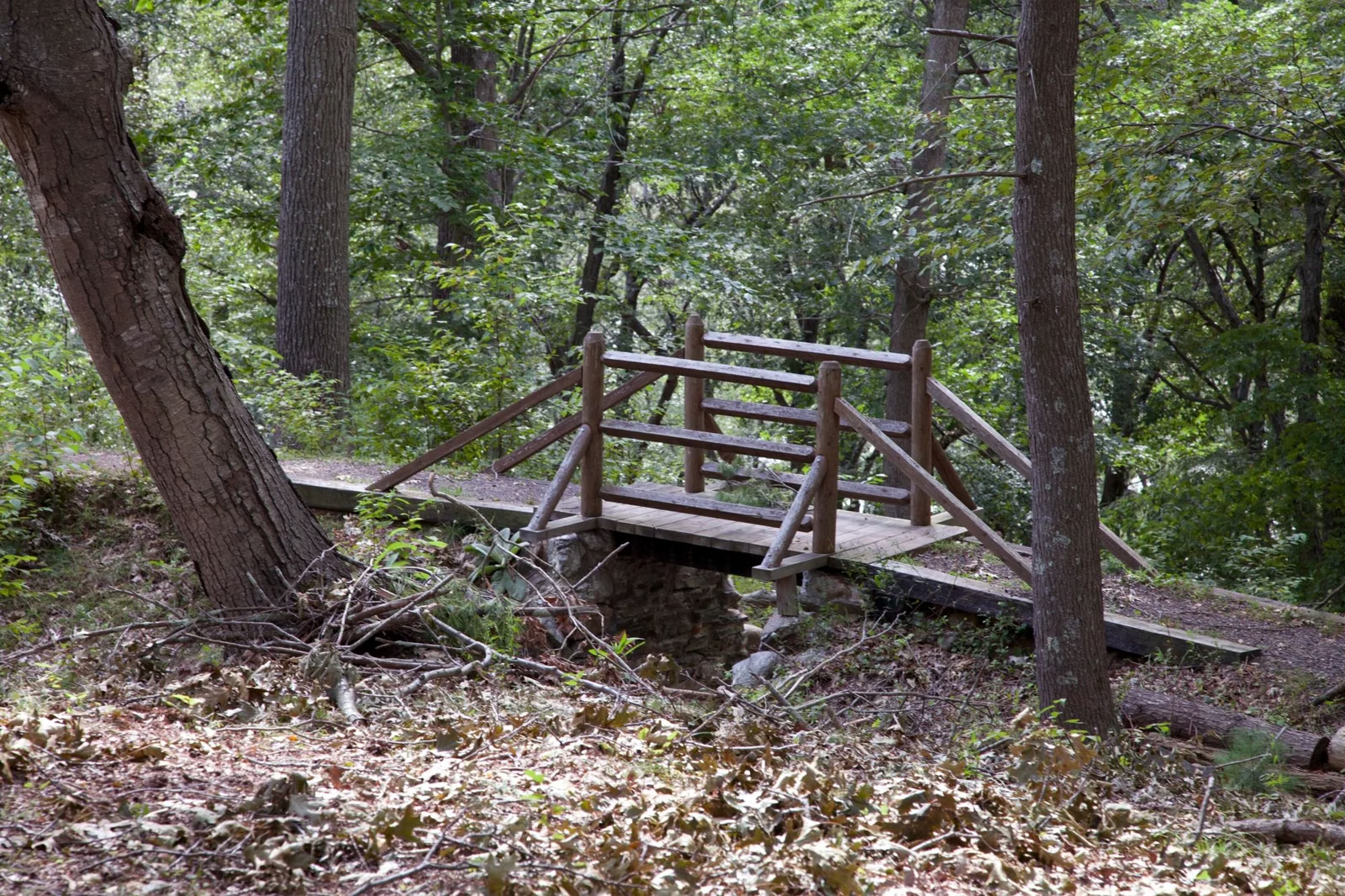
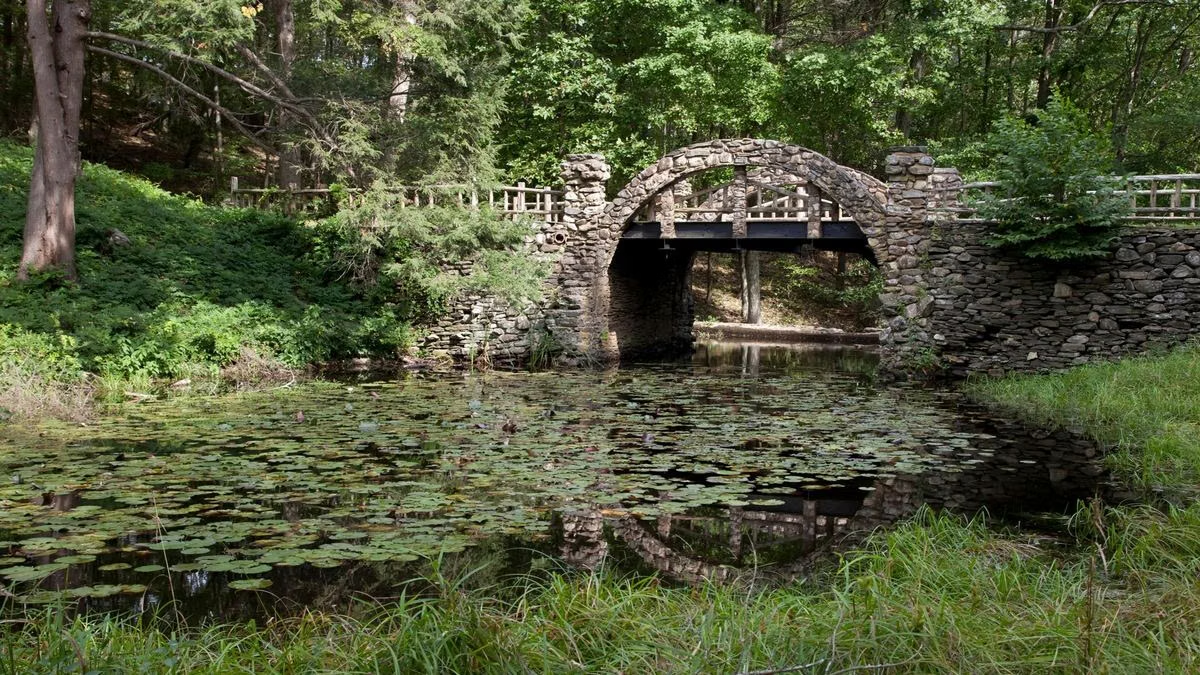
DEEP's suggested walk is the Train Trail (Purple) to the Blue Trail, about 1.5 miles along the old railroad bed and former driveway, rated easy to moderate. The purple section crosses footbridges and trestles and goes through the 75-foot tunnel; the Blue Trail then leads to the Osaki house and the wreck on the riverbank. Both are marked on DEEP's trail map. Check a tide table before you go, because the hull is easiest to see at low tide. Full route details are on hiking and the trail map.
Yukitaka Osaki and His House
Yukitaka Osaki was born in Japan's Kanagawa Prefecture in 1865 and came to the United States in 1888. Around 1896 or 1897 Gillette hired him to work on his houseboat The Holy Terror and then on the Aunt Polly. Osaki became Gillette's valet, assistant and stage dresser, and DEEP calls him Gillette's closest confidant.
When the castle was finished, Gillette gave Osaki his own small house on the southern corner of the estate, close to the river and the village of Hadlyme. Osaki lived there with his mule, his donkey and his gardens, and Gillette's will left him the use of it for life. He died on September 29, 1942, and is buried in Cove Cemetery in Hadlyme. CT Humanities notes that the house is part of the park but is not open to the public; you can see it from the trail and from the lawn at the ferry landing.
Good For / Maybe Skip If
- Good for: history fans, people who have already toured the castle, and anyone who wants a short walk with a destination.
- Maybe skip if: you need a level, paved path. None of the trails are paved, and the Friends of Gillette Castle State Park say the White Trail near the Goldfish Pond is the most workable for wheeled mobility devices (plan your visit).
The Aunt Polly & the Osaki House FAQ
What is the Aunt Polly at Gillette Castle?
The burned hull of William Gillette's 144-foot steam houseboat. It caught fire in December 1932 and lies on the Connecticut River shore below the castle.
Can you still see the Aunt Polly?
Yes, from the Blue Trail. The hull is easiest to see at low tide, when CT Humanities says more than 100 feet of it shows.
How do you hike to the Aunt Polly?
DEEP suggests the Train Trail (Purple) to the Blue Trail, about 1.5 miles, easy to moderate, through the tunnel and on past the Osaki house.
Can you go inside the Osaki house?
No. It is part of the park but not open to the public. You can see it from outside.