William Gillette
William Hooker Gillette (1853–1937) was a Hartford-born actor, playwright and director who played Sherlock Holmes on stage about 1,300 times between 1899 and 1932 and built Gillette Castle in East Haddam with the money the role earned him. He gave Holmes the deerstalker cap and curved pipe that still define the character, and wrote the line "Oh, this is elementary, my dear fellow," which later became "Elementary, my dear Watson."
William Gillette at a Glance
A Hartford Childhood
Gillette grew up in Hartford's Nook Farm neighbourhood, where Harriet Beecher Stowe and Mark Twain were neighbours. His father, Francis Gillette, was a former U.S. senator who backed public education and the abolition of slavery; his mother, Elizabeth Daggett Hooker Gillette, descended from Thomas Hooker, a co-founder of the Connecticut Colony. As a boy he built a puppet theatre, and with friends he published an amateur journal, Hail Columbia, in 1866 and 1867. He studied at several schools, Harvard and Yale among them, but chose the stage.
Into the Theatre
His first professional part, in 1874, was a small speaking role in his neighbour Twain's stage version of The Gilded Age. By 1881 the producers Gustave and Daniel Frohman had hired him as actor, director and playwright, and his first play for them, The Professor, ran 151 performances in New York before touring. CT Humanities credits him with a quieter, more conversational style than the shouted melodrama of the day, and with early experiments in stage sound and lighting.
In 1882 he married Helen Nichols, an actress from Detroit. She died in 1888 of a burst appendix, aged 28. The couple had no children, and the Friends of Gillette Castle State Park record that he promised her he would never remarry. He did not.
Becoming Sherlock Holmes
In 1897 Gillette's play Secret Service was a hit in London. Arthur Conan Doyle, who had ended his Holmes stories in 1893, wanted a stage version but could not write one he liked, and the producer Charles Frohman suggested Gillette. Gillette read the stories for the first time, wrote a play drawn from several of them while touring, and took it to Doyle in England in 1899. The two became friends.
Sherlock Holmes opened at the Star Theater in Buffalo on October 23, 1899, and moved to the Garrick Theater in Manhattan on November 6. Critics were cool; audiences were not. Gillette played the part about 1,300 times until his last performance on March 19, 1932, nearly 33 years after the first.
What Gillette Gave Holmes
Most of the Holmes image comes from Gillette rather than Doyle:
- The deerstalker cap and long cloak, which Doyle's Holmes would have worn only in the country.
- The curved pipe, which Gillette thought worked better on stage than a straight one.
- "Oh, this is elementary, my dear fellow," a line that never appears in Doyle and later became "Elementary, my dear Watson."
Doyle used Gillette's Holmes as the model for illustrations when he went back to writing Holmes stories in 1901. The Friends add the magnifying glass to the list.
The Seventh Sister
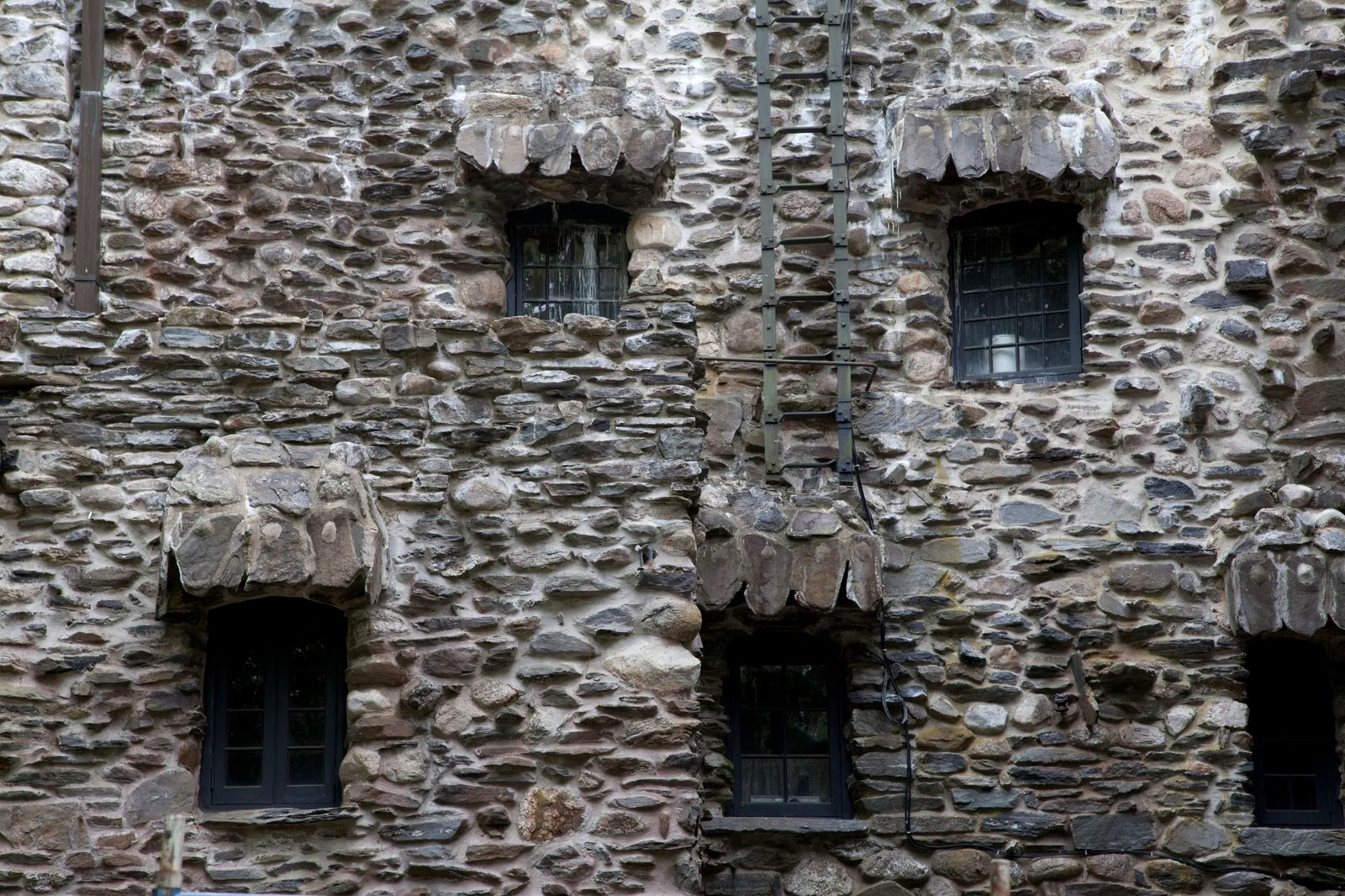
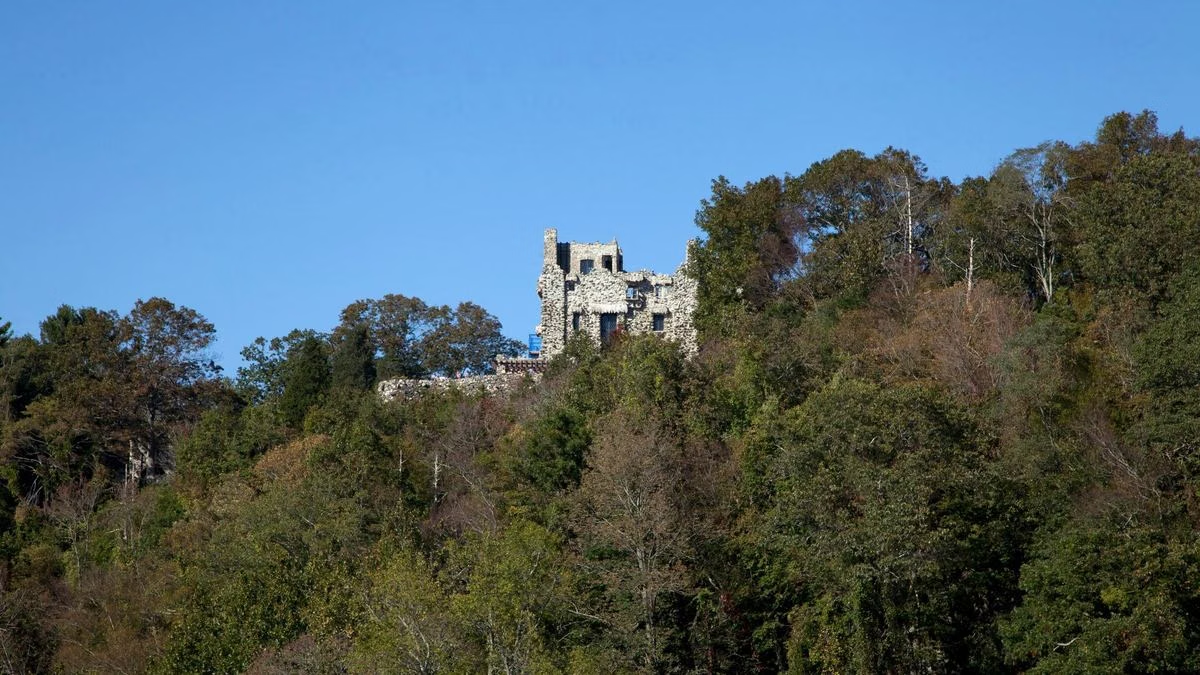
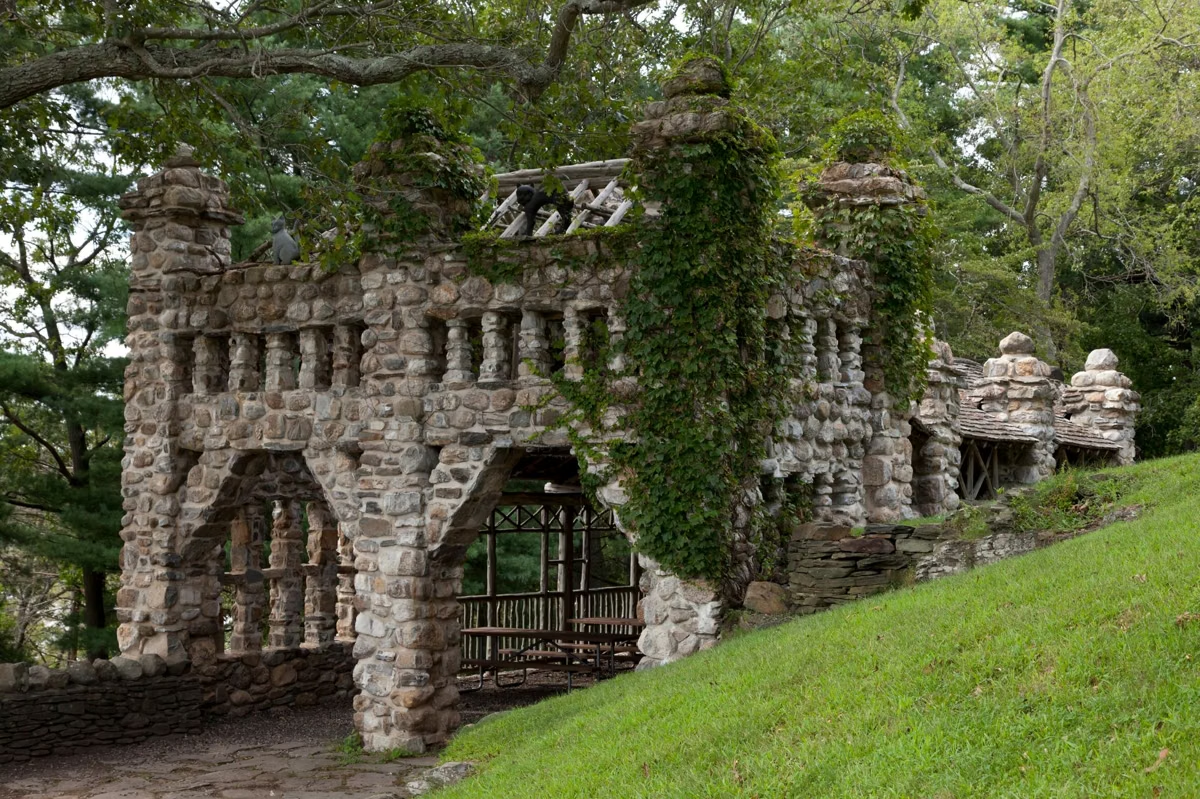
Gillette spent part of his Holmes fortune on a retirement home on the southernmost of the Seven Sisters hills above the Connecticut River. He insisted it was not a castle and named the estate the Seventh Sister. He designed the house and much of its furniture himself, from the 47 carved doors to the hidden mirrors that, CT Humanities says, let him watch guests such as Albert Einstein and Calvin Coolidge and time his entrances. Building ran from 1914 to 1919 (history of the castle). Around the house he laid three miles of quarter-scale railroad (train trail).
Yukitaka Osaki
For about four decades Gillette's valet, assistant and stage dresser was Yukitaka Osaki, a Japanese immigrant who first worked on Gillette's houseboats. Gillette gave him a small house on the southern corner of the estate near the river and, in his will, the use of it for life. Osaki died in 1942 and is buried in Cove Cemetery in Hadlyme. DEEP's Blue Trail passes his house, which is not open to the public (Aunt Polly and the Osaki house).
Death and the Will
Gillette died in Hartford on April 29, 1937, aged 83, and is buried beside Helen in the Hooker family cemetery in Farmington. His will said he did not want the estate to fall into the hands "of some blithering saphead who has no conception of where he is or with what surrounded." His heirs turned down a $35,000 auction bid in 1938, and in 1943 the State of Connecticut bought the property (how it became a state park).
William Gillette FAQ
Who was William Gillette?
An American actor, playwright and director from Hartford, Connecticut (1853–1937), best known for playing Sherlock Holmes on stage about 1,300 times and for building Gillette Castle in East Haddam.
Did William Gillette say "Elementary, my dear Watson"?
Not exactly. Gillette wrote "Oh, this is elementary, my dear fellow." The film actor Clive Brook later changed it to "Elementary, my dear Watson." Neither line is in Doyle's stories.
How many times did William Gillette play Sherlock Holmes?
About 1,300 times, from the play's premiere in 1899 to his last performance on March 19, 1932.
Where is William Gillette buried?
In the Hooker family cemetery in Farmington, Connecticut, next to his wife, Helen Nichols Gillette.
Did William Gillette have children?
No. His wife Helen died in 1888, six years after they married, and he never remarried.